

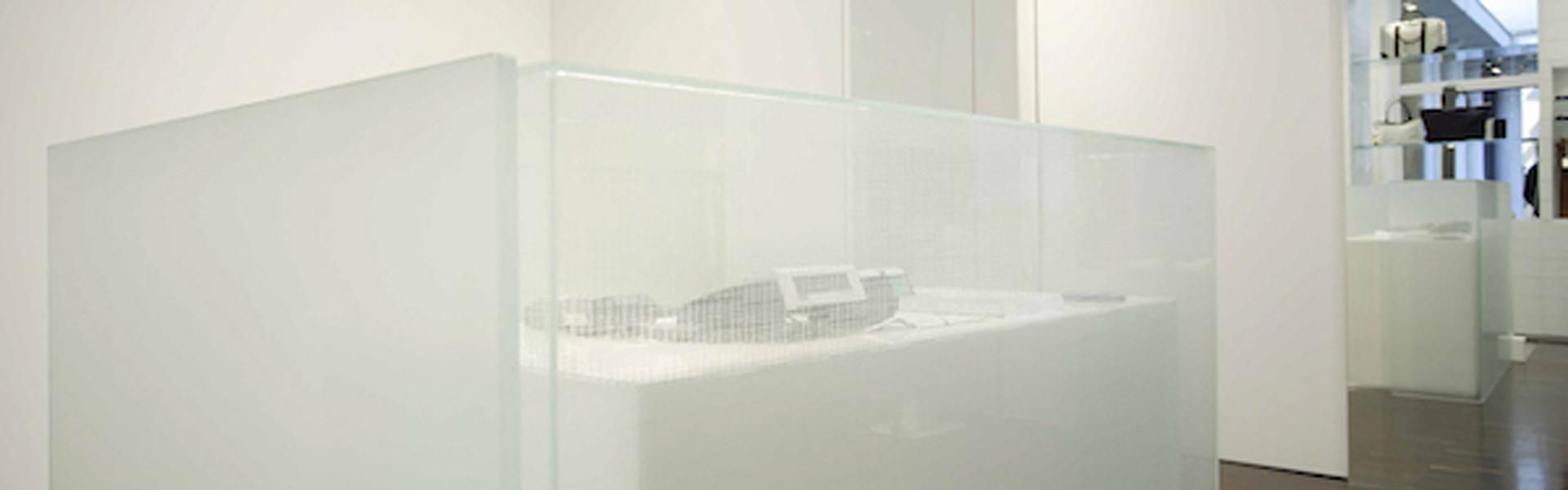
Tempered glass is produced through a specific thermal treatment called tempering, which hardens the piece after it has been processed and cut to the required dimensions. The processing of tempered glass makes it exceptionally strong, as surface defects are compressed by mechanical stresses while the internal core remains protected. This makes it virtually impossible for cracks or defects to form that could lead to the glass breaking.
Tempered Glass: How Is It Produced?
But how is tempered glass produced? The process required to obtain safety tempered glass consists of placing the glass sheet—already cut and with its edges at least roughly finished—on a roller table that slides into a special furnace heated to the “glass transition” or tempering temperature, which is approximately 640 °C. Unlike other glass manufacturing processes, tempered glass must be cooled immediately using cold air jets, which cause the surface layers to harden. This causes the outer surface to contract while the inner part, which cools more slowly, remains viscous. The resulting compression forces on the outer surface and tensile stresses in the core induce a state of permanent tension in the glass sheet. This gives it significantly higher mechanical strength, making the glass robust and resistant to break-in attempts, thermal shocks, and bending.
The presence of these stresses makes it impossible to cut or process the glass after tempering, as any damage to the edges would cause the glass to shatter into many small fragments. However, this characteristic is highly valuable for applications where broken glass fragments could injure people or damage property, making tempered glass ideal for high-level active and passive security. Conversely, safety tempered glass cannot be used for overhead glazing on the inner side of a roof and is not specifically recommended as fall-protection glass. Nevertheless, safety tempered glass is perfect for applications requiring high resistance to thermal stress, or for painted, enameled, and patterned glass.
Where to Apply Tempered Glass
The possible applications for tempered glass are numerous. Thanks to its superior strength, tempered glass can be used to create architectural elements without a supporting structure, such as all-glass doors, partitions, shower enclosures, and parapets. Furthermore, because it breaks into blunt, non-sharp fragments, tempered glass is classified as a safety glass. These features also make it highly suitable for the automotive industry, for windows and windshields. Finally, thanks to its resistance to high temperatures (up to approximately 200°C), tempered glass is used for oven doors, fireplaces, lamps, and more.
For over 20 years, Vetreria Re has specialized in the design and production of safety glass for civil and industrial use, suitable for storefronts, parapets, urban furniture, shower enclosures, floor-to-ceiling glazing, museum display cases, flooring, and much more. With a range that includes tempered, laminated, armored, and anti-shatter safety glass, Vetreria Re can meet diverse security needs without compromising on aesthetics.