

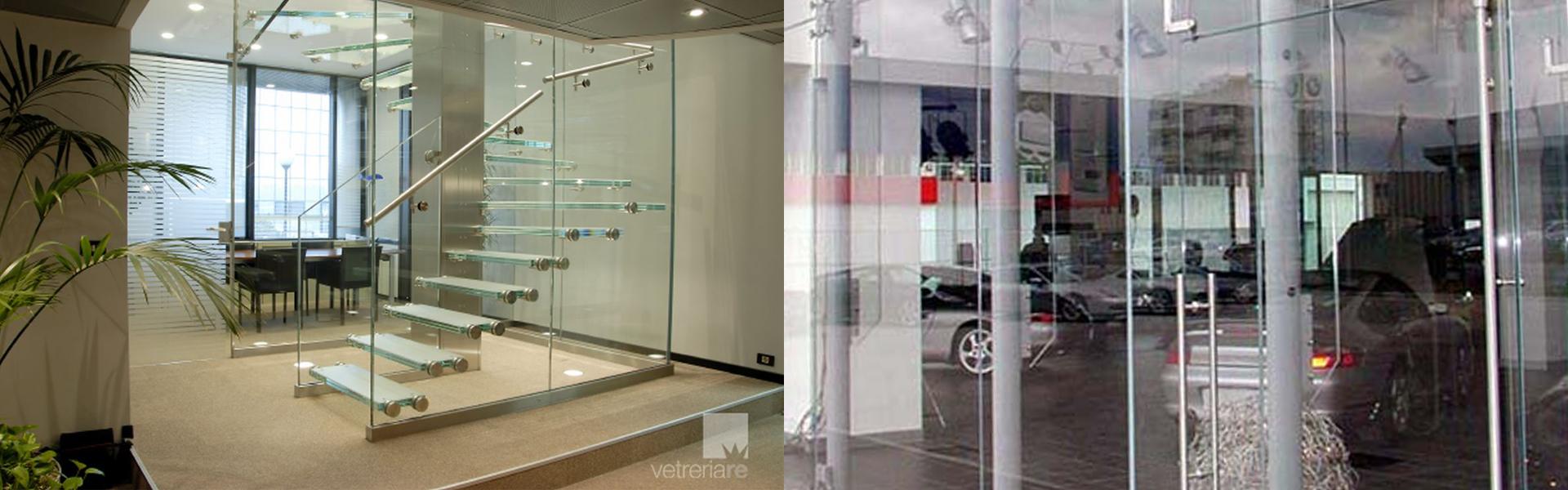
When speaking of structural materials in general, reference is made to all materials used in the creation of an architectural work. Specifically, as established by Directive 89/106 and specified by Interpretative Document No. 1, “A structural product is one that allows the work in which it is incorporated to satisfy the essential requirement of Mechanical Resistance and Stability.” This requirement is met if, once installed, it prevents the collapse of the work or any part of it, inadmissible deformations, damage to other parts or systems, or damage that is disproportionate to the cause that triggered it.
Structural Crystals: Quality Over Time
Common characteristics of structural materials must include a guarantee of quality, attested by specific national and international certifications, and durability—the capacity to maintain the physical characteristics of materials and structures throughout the project’s useful life. Durability, in turn, is a guarantee of safety, as it ensures the stability of the work. Furthermore, according to the Technical Standards for Construction (NTC 08), materials for structural use must be uniquely identified and qualified under the manufacturer’s responsibility and accepted by the site manager through the verification of qualification documentation and, if necessary, experimental acceptance tests.
Some authors limit the definition of structural glass to that used for elements like beams, pillars, or membranes, while using the term glass structures for works where glass predominates as external cladding. In this context, the definition is used in its broader sense, referring to all glass applications where resistance is essential for human safety. This involves a precise analysis of the mechanical behavior of the glass, considering all stresses to which it is subjected to ensure a safe and solid finish.
Applications of Structural Crystals
Structural crystals are applied in many situations where both structural hold and aesthetic appeal are vital. One application involves glass canopies, whose load-bearing structures can consist of glass beams and pillars, sometimes utilizing metal cables as tie rods. For structural crystal canopies, laminated glass can be used with metal structures supporting the glass on all sides, or tempered and laminated safety glass with PVB interlayers for extreme load conditions, such as when the glass is not supported along the entire perimeter or uses point-fixing systems.
Creating structural glass canopies is an extremely complex operation from a mechanical and engineering standpoint, requiring qualified professionals to perform the complex calculations that ensure stability and resistance. It is essential to perform static verifications using specific tables, diagrams, or FEM models based on experimental data. Vetreria Re, active for over 20 years in the design and creation of structural crystal works, also handles the design and implementation of structural glass canopies, ensuring maximum comfort and acoustic silence for the protected areas.