

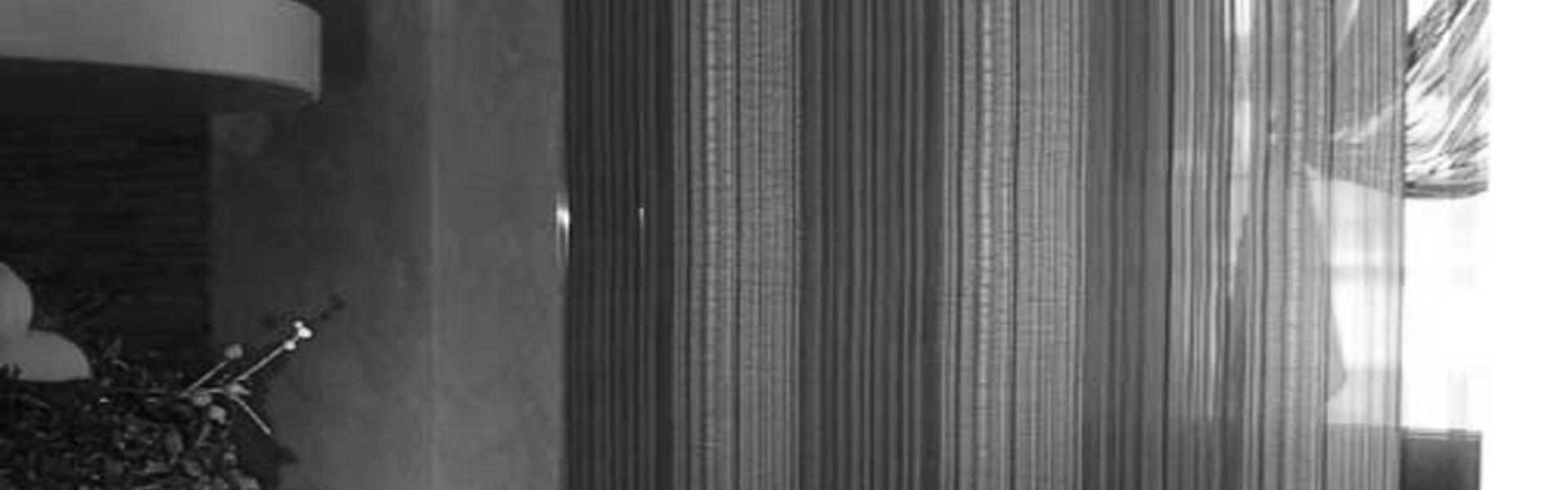
In addition to sandblasting, lead binding, gilding, enameling, or painting techniques, artistic glazings can also be created using the fabric lamination method. Following a procedure similar to the one detailed on the page dedicated to laminated safety crystals, it is possible to create artistic glazings by inserting fabrics and textiles, chosen according to the client’s taste, between two or more glass panes instead of the plastic film (PVB). Glass lamination is a technique that allows a wide range of materials to be inserted inside the glass panel, creating unprecedented aesthetic effects.
Fabric Lamination
Vetreria Re, active in the design, creation, and installation of architectural elements and glass furnishing objects in residential, commercial, or professional contexts, offers its international clientele artistic glazings created by applying the fabric lamination method, the technical characteristics and production methods of which are illustrated below. Ideal for the creation of interior doors and partitions, dividers, screens, and other decorative elements, fabric lamination allows for unique decorative effects that can embellish any type of environment.
Thanks to the fruitful link between technical evolution and design research, interior architecture can offer new and innovative projects whose advantages are not exclusively aesthetic but also practical and technical. Decoration carried out through fabric lamination combines the safety characteristics of laminated glass with the refined aesthetics of artistic glazings, capable of scenographically and uniquely characterizing furniture, doors, partitions, shelves, bathroom and kitchen tops, flat crystals for tables, and much more in the field of interior design. The possible applications of fabric-laminated glass in construction are numerous and include the possibility of creating original parapets, canopies, verandas, gazebo covers, and winter gardens—essentially any environment where one wishes to maintain external light while moderating direct solar radiation, ensuring a perfect finish.
Fabric Lamination: The Method
As mentioned, the technique for creating fabric-laminated glass is entirely analogous to that used for safety laminated glass, with the difference that, in addition to the specific adhesive plastic PVB film, fabrics and textiles are inserted between the glass panes. The choice of fabric will naturally be the factor that most influences the final result: depending on the colors, patterns, and type of fabric chosen, artistic glazings will have different styles. Soft colors, sober patterns, and opaque shades allow for the creation of glazings with discrete elegance, while bright color contrasts and original patterns will give life to lively architectural elements capable of illuminating any room with originality. It is also possible to choose specific two-tone or metallic fabrics to obtain unique plays of light, or opt for opaque colors and precious fabrics like silk, lace, and linen to give the artistic glazing a refined look and maximum comfort.
Glass lamination with cloth can be carried out using fabrics such as silk, cotton, gauze, lace, jute, polyester, artificial fibers, carbon fiber, fiberglass, and any other type of textile, always keeping in mind that it is preferable to opt for fibers that are not excessively compact and are able to let some light through, especially if one wishes to maximize the brightness of the rooms. The transparent, semi-transparent, or opaque fabric is then inserted inside the glass panel, consisting of two overlapping panes laminated with a special plastic film (PVB) capable of increasing impact resistance and passive safety. This composition makes laminated glazings suitable for doors, large windows, and full-wall glazings, as they are accident-prevention and shatterproof safety glasses that do not pose a danger even in case of breakage, while providing excellent acoustic silence.
Laminated Glazings With Digital Images
Laminated glazings can also be made into panels using high-resolution digital images, re-elaborated by Vetreria Re’s artistic laboratory and printed directly onto a tempered glass pane or onto a specific fabric laminated between two glass panes. The aesthetic effect created by the lamination of glass and fabric can be fully appreciated in all its scenographic beauty at the Vetreria Re showroom, which for over 20 years has been involved in industrial glass processing and the creation of artistic glazings using various techniques, including lead binding, sandblasting, gilding, enameling or painting, and lamination with wire mesh or fabric.