

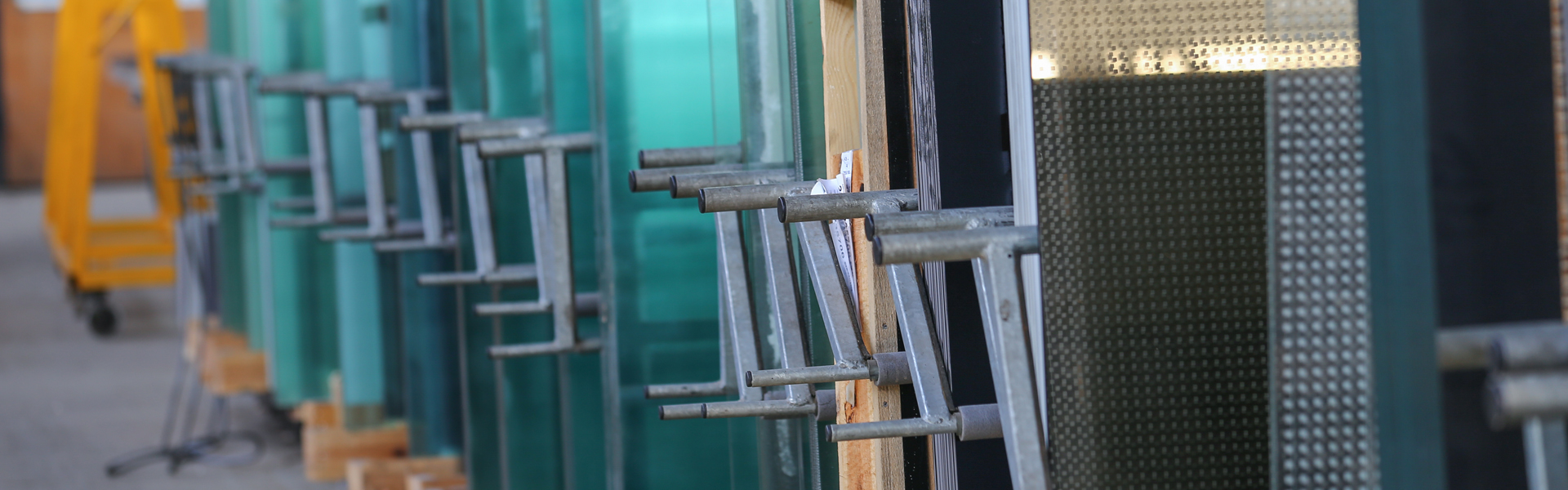
Vetreria Re, active since 1989 in the production and processing of glass for technical, industrial, structural, artistic-decorative, and safety uses, is an excellent partner for the production and installation of glass elements in the technical and industrial sectors. Specialized in the production of transparent flat glass sheets, flat and curved structural glass, safety crystals, and self-supporting glazing for structural uses, Vetreria Re provides technical industrial glass in all formats and sizes.
Classification and Production of Industrial Glass
In the industrial sector, the main classifications of glass are made based on its macroscopic physical characteristics. The production of glass for technical and industrial use generally follows two main formats: the large sheet, with sizes usually around 6000×3210 mm, or the crate containing sheets of 2400×3210 mm, primarily used for semi-finished industrial glass. The crate of sheets usually has a higher price compared to simple glass sheets.
Produced in sheet form as early as Roman times, industrial glass is the only material that allows windows to be shielded with transparent materials and enables the production of countless everyday objects, such as bottles, glasses, drinking cups, light bulbs, car windows, television screens, and much more. Furthermore, technical industrial glass is distinguished by the possibility of recycling it completely and giving it new life, creating other highly useful objects.
How is glass for technical and industrial uses obtained? Glass is made from the fusion of a homogeneous mixture containing silica, soda, and lime—the raw materials of glass—which are mixed in correct proportions along with glass cullet, alumina, and other oxides that serve as colorants. Sodium carbonate is used to lower the melting point of silica to approximately 1,500 °C, which would otherwise settle at higher temperatures (about 1,700 °C). Other substances are added to the industrial glass mixture to provide important technical and aesthetic characteristics such as strength, hardness, transparency, and brilliance, ensuring a high-quality finish.
Application of Glass for Technical Industrial Use
The homogeneity of the mixture is fundamental for creating glass for technical and industrial uses; this is achieved by carefully calculating the grain size of the raw materials (granulometry), ensuring high-quality mixing, and adding small doses of water (2-4%) to prevent phase separation. Characterized by transparency, hygiene, and the ability to withstand high temperatures, glass is a perfect material for the food and confectionery industry as a container for food and beverages, providing both safety and comfort.
Resistant and inert, glass lends itself to countless technical and industrial uses, including precision applications: glass is an essential component for the pharmaceutical industry, optics, electronics, photography, and much more. Very few technical-industrial productions can do without glass, and no buildings—whether residential or industrial—can omit glass for windows or partitions, even those with fire-resistance characteristics (see RE and REI fire-rated glazing). Another advantage of glass lies in its ability to provide acoustic silence and thermal insulation in complex industrial environments.
The Importance of Glass Recycling
When recycling glass, one must first ensure only glass is collected: porcelain, plates, cups, light bulbs, neon tubes, and jars containing specific chemical agents must not be placed in the glass bin. Different materials have different melting temperatures and can create significant problems for the glass recycling process.
Once the glass is separated from other materials, it is important to remove all aluminum and plastic caps and lids, placing each in the appropriate recycling bins. Finally, it is important to wash glass objects to remove any food residue. In the glass bin, you can place: bottles, flasks, and glass jars, without caps and lids and, where possible, without paper labels or plastic joints. The following cannot be recycled with glass: porcelain, light bulbs, window glass, mirrors, flasks, and oven-safe dishes (Pyrex).
Transparent, compact, waterproof, and unalterable, glass is currently the best technical-industrial packaging because it can be regenerated an infinite number of times: more than 60% of bottles produced in Italy are made from recycled glass. Extremely ecological because it is produced without the need for oil and releases no residue, industrial glass is a sustainable choice. However, for the industrial glass recycling process to be effective and efficient, it is essential to have the smallest possible amount of non-glass residue (such as metal, plastic, and paper).