

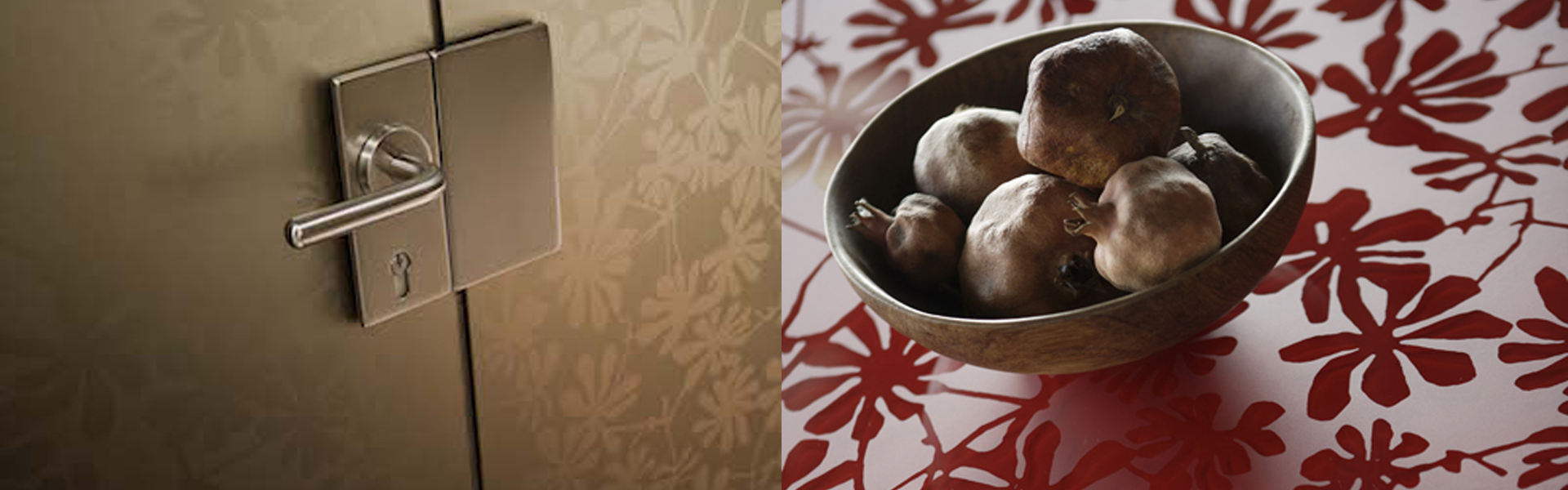
Textured glass falls under the category of decorative glass used for creating artistic glazing. Characterized by a typical translucent appearance, textured glass is used for sliding or hinged doors, fixed or mobile glass partitions, scenic windows, and French doors, as well as for parapets, canopies, tabletops, furniture, and cabinet displays.
Whether colored or transparent, textured glass is obtained through a specific lamination process where a ribbon of hot glass is passed between two metal rollers. This procedure allows various types of embossed designs to be pressed onto the glass sheets, which allow light to pass through while preventing a clear view of the other side. Like frosted or sandblasted glass, textured glass distorts object details without obstructing light. The effect varies depending on the specific texture, which can add brilliance or opacity to different points of the sheet.
The Production of Textured Glass
Textured glass is made using a technique that was standard for common glass manufacturing before the introduction of the “float” system, patented by Alastair Pilkington in the 1960s. Before this method—which involves pouring molten glass onto a bath of molten tin—sheet glass was produced by casting, extrusion, or lamination.
These manufacturing processes generated surfaces with faces that were not optically parallel, causing characteristic visual aberrations. This technique, now replaced by the float method for standard quality glass, is still used to produce special decorative glass ideal for artistic glazing or security glass. In addition to textured glass, wired glass is also produced by casting, inserting a metal mesh into the molten glass. Often used for the lower sections of parapets, wired or reinforced glass is a security glass that also allows for decorative uses.
Casting, Extrusion, or Lamination
Textured glass, made by casting, extrusion, or lamination, features a characteristic relief design on one or both faces. The most well-known and widespread type is the “C-texture” glass, widely used for doors, shower enclosures, refrigerator shelves, and balcony dividers due to its durability and ability to provide privacy.
Available in transparent glass or in shades ranging from green and brown to gray, textured glass can also be made from tinted solar-control sheets. Being semi-transparent, it obscures the view while offering a unique brilliance when hit by light. Ideal as an architectural decorative element for both facades and interiors, textured glass can undergo various treatments to make it insulating, tempered (safety), or laminated.