

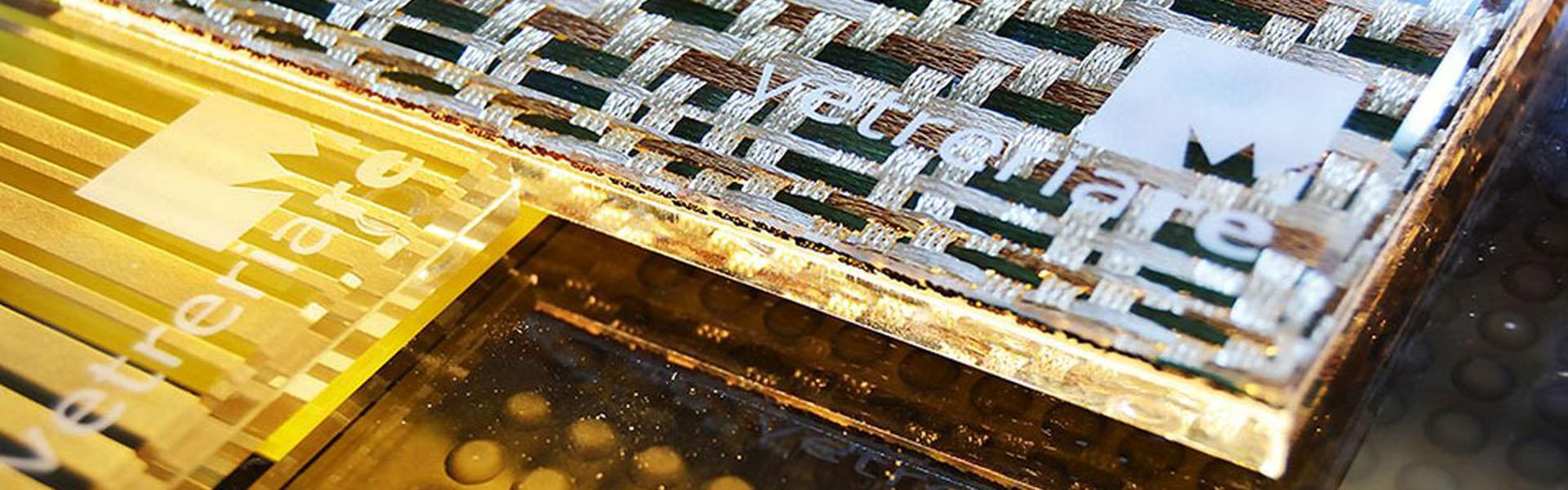
As seen in the section dedicated to laminated glass and lamination with fabric, the layering technique allows glass to be given greater resistance characteristics while generating original aesthetic effects. The choice of materials that can be inserted within the glass sheets is practically unlimited, thus allowing for the maximum possible customization. In particular, the application of metal meshes to laminated glass enables the creation of innovative decorations capable of livening up any environment with taste and elegance while ensuring high levels of security.
In fact, even in the event of accidental breakage, laminated glass does not pose a danger as it does not release sharp shards that risk being projected in all directions; instead, it remains compact and produces only blunt fragments. Traditional laminated safety glass, made by inserting special plastic adhesive films (PVB) between the glass sheets, is suitable for application in all situations where there is a risk of spontaneous breakage or impacts that could threaten personal safety. According to current regulations on passive safety, laminated glass allows for the creation of doors, parapets, floors, fixed and mobile partitions, staircases, windshields, curtain walls, suspended facades, and safety and accident-prevention glass in general.
The Use of Metal in Glass
The insertion of meshes, weaves, or metal structures within the frame that constitutes the laminated glass allows not only for additional resistance and robustness to be given to the structure but also for the generation of original chromatic and visual effects whose design can enhance personalized and creative furnishing projects. The use of metals with knit or woven mesh patterns for glass lamination is the basis for spectacular aesthetic effects with multiple applications, capable of taking on different nuances depending on the amount and angle of the light hitting them, constantly moving and animating the spaces in which these artistic glazings are installed in new and different ways.
The artistic interpretation of laminated glass with the insertion of different types of metal, featuring various shapes and colors, allows for the creation of countless stylistic solutions. These enable the transformation of functional elements into decorative ones, perfectly meeting the needs of homeowners or interior architects and giving greater personality to the spaces involved. By using copper, bronze, stainless steel, aluminum, brass, iron, titanium, or any other metal—treated in various ways, alone or in combination with other metals or materials of a completely different nature, such as fabrics, leathers, or synthetic or natural fibers—it is possible to obtain multiple combinations of colors, patterns, and chromatic effects, where aesthetic qualities combine with practical ones.
Artistic glazings made according to the metal mesh lamination method are not only beautiful but also secure, protecting privacy with discretion and elegance. Hygienic, bacteriostatic, antistatic, fire-resistant, and capable of providing a shield against electromagnetic fields, metal also offers good mechanical resistance properties that increase the already high performance offered by laminated glass. Depending on the specific type of metal chosen, one or another mechanical characteristic will be emphasized, resulting in different aesthetic effects and a unique finish.
Laminated Glass for Interiors and Exteriors
In the field of outdoor construction, laminated glass with metal meshes allows for the creation of original fixed or mobile glazings, coverings for verandas and gazebos, and parapets capable of generating variable shading effects depending on the chosen weave. Even in interior design, the applications of metal-laminated glazing are numerous and include the production of doors, windows, partitions, crystal tops for tables and coffee tables, display cases for furniture, bathroom or kitchen tops, shelves, and even original staircases, parapets, and walkable glass floors. These elements contribute significantly to domestic comfort and acoustic silence.
By making laminated glass even more resistant to break-in attempts, smashing, or vandalism, the insertion of metal meshes allows for the creation of original and refined artistic glazings that leave a unique mark on domestic, commercial, or professional environments. Thanks to over twenty years of experience and collaboration with esteemed architects and interior designers, Vetreria Re is able to offer its select international clientele artistic glazings handcrafted with techniques such as lead caming, sandblasting, gilding, enameling or painting, and lamination with fabric or metal meshes.