

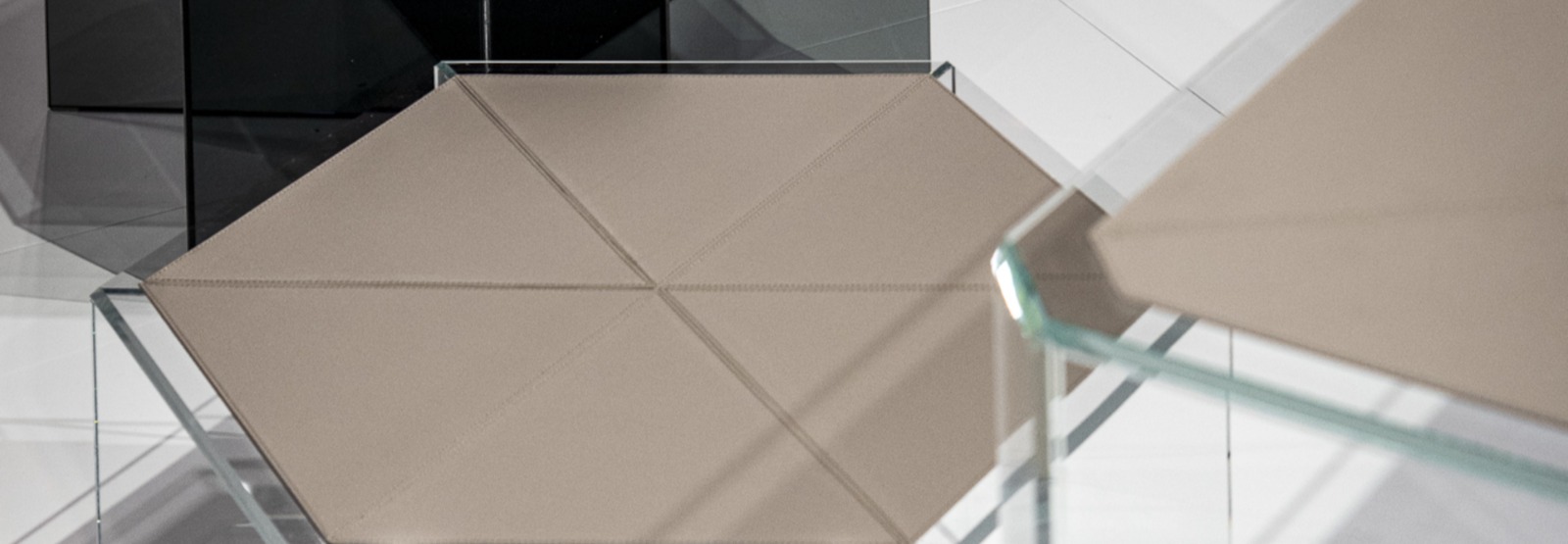
The Reale Collection, created through a collaboration between Vetreria Re and designer Marc Krusin, explores the encounter between two seemingly distant materials: crystal and leather. A material dialogue that takes shape in a series of furniture pieces where technical precision, craftsmanship and design sensitivity find a refined balance.
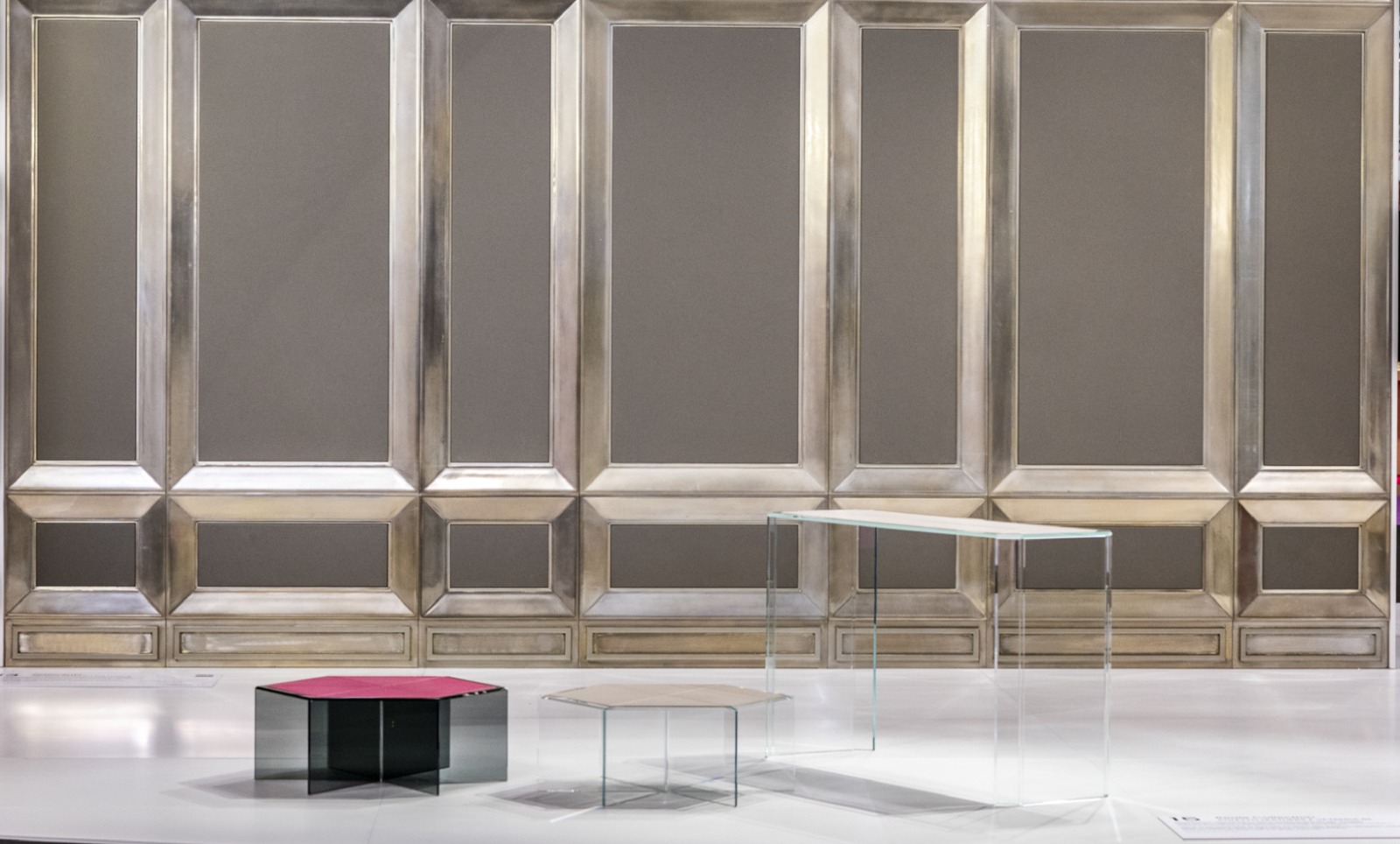
The project was presented at LineaPelle Interiors 2026, held from February 11 to 13 at Fiera Milano Rho, one of the international events dedicated to material research and the growing dialogue between design and the fashion industry. On this occasion, Vetreria Re took part in the installation with two creations from the collection, the Jean Michelle console and the Frank 2 side table, presented in two versions and designed by Marc Krusin.
The event, curated by architect Maurizio Molini, offered a platform for exploring materials, technologies and design languages, where glass revealed new expressive possibilities through its dialogue with leather and contemporary design culture.
The Encounter Between Crystal and Leather
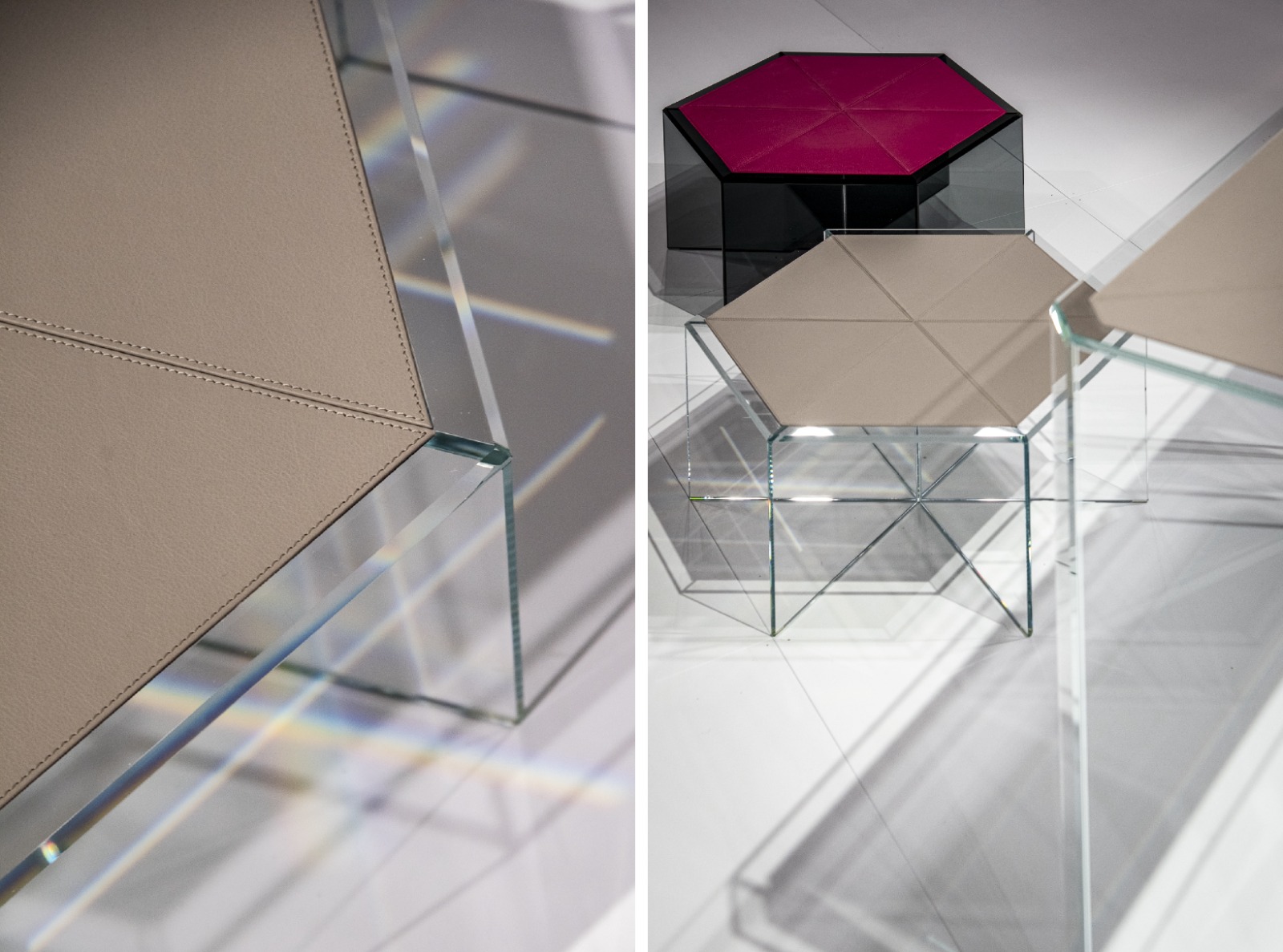
At the heart of the collection lies a study of the relationship between materials. Flat crystal for furniture, crafted with extreme precision, meets leather inserts produced by Poletto Leathers, stitched and perfectly aligned with the glass surfaces.
The contrast between the brilliance of crystal and the tactile softness of leather introduces a sensory dimension that enriches the object without altering its formal clarity. The reflective surface of the glass amplifies light and contributes to the visual lightness of the piece, while the leather adds material depth and a tactile quality that invites touch.
This dialogue between glass and leather in design creates a refined balance between smooth surfaces and soft textures, between transparency and material presence.
Precision and Glass Craftsmanship
The collection highlights one of Vetreria Re’s distinctive strengths: custom glass processing for design and interior architecture.
The crystal tops feature precisely polished beveled edges, a finishing detail that enhances the reflective qualities of the material while reinforcing the geometric definition of each piece. This type of processing emphasizes the purity of the crystal and its ability to interact with light.
Alongside the versions with leather inserts, some surfaces are enriched with geometric glass engravings and sandblasted finishes, introducing a graphic dimension to the material. These engravings create patterns that transform the perception of the surface and generate subtle contrasts between transparency and opacity, depth and reflection.
The sandblasting process, applied with precision, allows the diffusion of light to be carefully controlled, creating visual effects that shift depending on the viewing angle and the lighting conditions of the space.
Glass as a Design Element
In this collection, glass is not simply a construction material but becomes a true design element for interior architecture. Its ability to reflect, filter and diffuse light plays a key role in shaping the perception of both the objects and the surrounding environment.
For this reason, crystal for furniture is increasingly used in contemporary interior design, where visual lightness, transparency and precision craftsmanship have become central elements in the design of spaces.
The collaboration with Marc Krusin allowed these qualities to be explored through essential forms and carefully calibrated proportions, where every detail, from the cut of the glass to the stitching of the leather, contributes to defining the final object.
International Design and Italian Craftsmanship
The Reale Collection emerges from the meeting between the design vision of Marc Krusin and the production expertise of Vetreria Re, a company specialized in creating custom glass solutions for furniture, retail and architectural applications.
The result is a series of pieces that reflect the value of Italian craftsmanship applied to contemporary design. Objects that appear minimal yet are the outcome of meticulous processes, where material quality and technical precision become an integral part of the design language.
Within this dialogue between international design and Italian craftsmanship, glass becomes the meeting point of material, light and form, reaffirming its central role in the landscape of contemporary design.