


In the landscape of contemporary architectural design, Vetreria Re’s expertise offers a concrete and competent response regarding passive safety, design, and comfort. When choosing safety glass for a residential, commercial, or public project, one of the most frequent questions among architects, window installers, and clients concerns the choice between tempered or laminated glass. Although both technologies belong to the category of safety flat glass for construction, their mechanical response to stresses and their breakage behavior are radically different. Selecting the correct option means ensuring individual safety, satisfying regulatory requirements, and guaranteeing the necessary long-term durability of the project.
What Tempered Glass Is and How It Is Made: Mechanical Resistance and Accident Prevention Safety
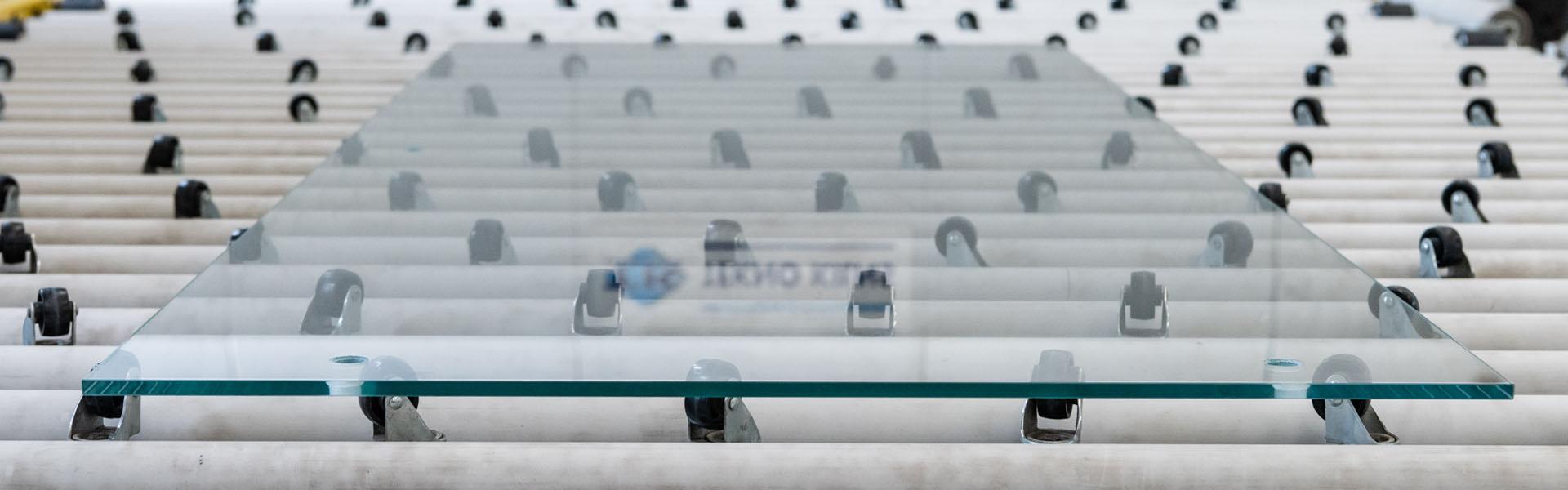
Tempered (or toughened) glass originates from a high-performance thermal transformation process. The raw glass sheet is heated inside specific ovens until reaching temperatures close to 700°C, then subjected to rapid and uniform cooling via controlled air jets.
This thermal shock induces a state of compression on the outer surfaces and a state of tension in the inner core of the pane. The result is an increase in mechanical strength and resistance to thermal shock up to 4 to 5 times higher than standard float glass. Regarding injury prevention, tempered safety glass shatters into a multitude of very small, blunt, and non-sharp pieces upon impact. This behavior drastically reduces the risk of serious injuries or deep cuts for anyone nearby.
However, the characteristics of tempered glass for construction and classic tempered glass carry an essential constraint: all cutting, drilling, or perimeter grinding finish operations must be executed prior to the tempering process. Any subsequent mechanical stress would cause the immediate breakage of the entire pane.
What Laminated Glass Is and How It Works: In-Place Retention, Silence, and Protection
Laminated glass (also known as bonded glass) utilizes a composite structure to offer a different level of protection. This technology involves joining two or more glass sheets through the interposition of one or more high-adhesion plastic films, such as Polyvinyl Butyral (PVB) or SentryGlas. The permanent bond occurs inside autoclaves under high pressure and controlled temperatures.
Unlike tempered glass, the key characteristic of bonded safety glass lies in its post-breakage performance. Should one of the sheets crack due to an impact, the fragments remain firmly attached to the plastic interlayer. The panel thus maintains its structural integrity, preventing splinters from falling into space and guaranteeing residual load-bearing capacity.
Beyond serving as a physical barrier, laminated glass delivers excellent performance in terms of living quality. The plastic interlayer dampens sound vibrations, offering superior acoustic silence, and blocks over 99% of UV rays, protecting interior furnishings from premature aging.
Tempered and Laminated Compared: Performance and Architectural Criteria
To understand the differences between tempered and laminated glass, one must analyze the nature of the risk to be prevented. Neither technology is absolutely superior; the choice depends on the primary stresses present in the respective application context:
- Impact and Thermal Shock Resistance: Tempered glass guarantees superior mechanical solidity and flexibility compared to single annealed glass, making it ideal for interior door leaves, large sliding windows, shower enclosures, and facades subjected to strong solar radiation.
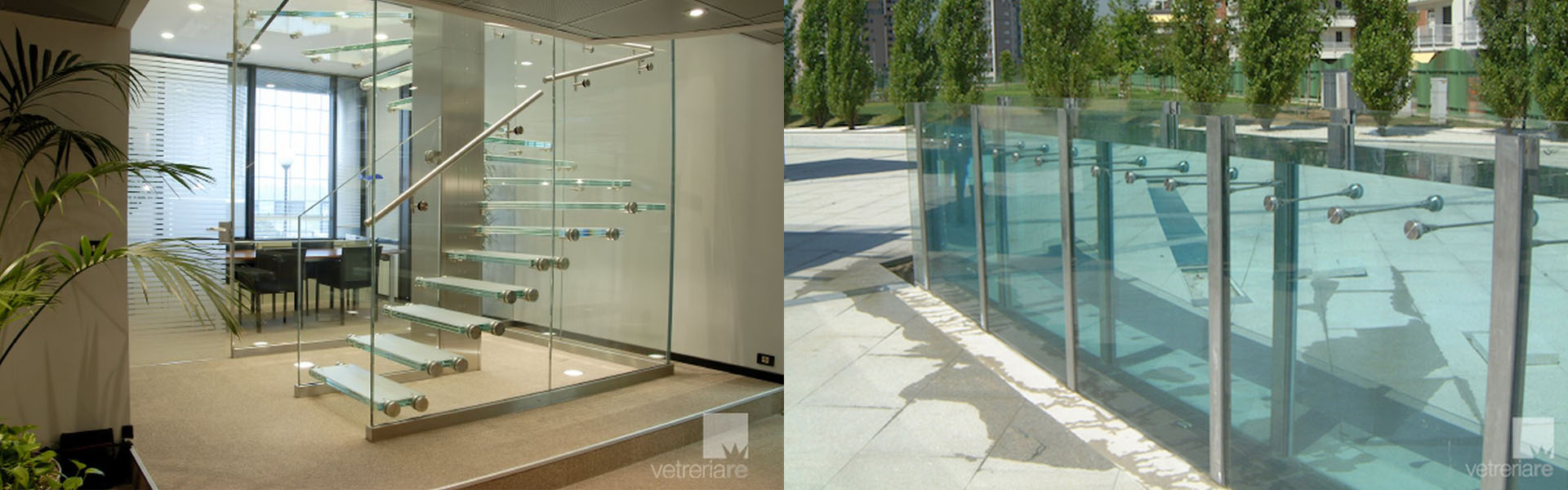
- Fall Prevention and Retention: Laminated glass is indispensable where glass breakage could result in people or objects falling into space, such as glass railings, glass roofs, walkable floors, and suspended partitions.
- Combined Solution (Tempered Laminated Glass): In complex architectural projects requiring both high mechanical strength and guaranteed in-place retention after damage, tempered laminated safety glass is utilized. This product combines the benefits of both processes and serves as the reference standard for self-supporting balustrades and high-performance curtain walls.
The Evolution of Protection: Shatterproof, Anti-Intrusion, and Armored Glass
Increasing pane thickness and multiplying intermediate plastic layers transforms glass from basic accident-prevention functionality to higher levels of passive safety.
Shatterproof glass and anti-intrusion glass systems represent a technical evolution designed to counter manual attacks aimed at break-ins or vandalism. Used in commercial shop windows, ground-floor residences, and residential entrances, these safety crystals with shatterproof treatment withstand repeated impacts from blunt objects (such as sledgehammers or pickaxes), delaying or preventing unwanted access.
Mention must also be made of armored safety glass, designed with high-thickness multilaminate structures that provide protection against extreme threats, including firearm projectiles and explosions—primarily utilized in banks, jewelry stores, and museums.
The Regulatory Framework: UNI 7697, Safety Classifications, and Design Responsibility
The selection of safety glass is not left to the discretion of the designer or client; it is governed by an imperative regulatory framework. The reference standard in Italy is UNI 7697 (Safety criteria in glass applications), which mandates the use of specific accident-prevention glass and protective panes installed based on the intended use and risk level of impact or falling.
Safety glass performance is certified according to specific European standards:
- UNI EN 12600: Classifies glass properties in case of human body impact (accident-prevention safety for glazed surfaces).
- UNI EN 356: Defines resistance against manual attack (classes P1A to P5A for shatterproof protection, P6B to P8B for anti-intrusion performance).
- UNI EN 1063: Establishes the classification of armored glass for firearm protection (classes BR1 to BR7).
Installing glass non-compliant with UNI 7697 specifications exposes professionals and construction companies to severe civil and criminal liability in the event of an accident.
Design Safety Without Compromise with Vetreria Re
Identifying the ideal glass combination means balancing structural safety parameters, thermal and acoustic insulation, light transmission, and aesthetic detail. Whether specifying the correct lamination for a curtain wall, defining finishes for decorative glazing, or installing high-protection perimeter walls, the support of a glass transformation specialist is a decisive factor for project success.
Vetreria Re supports architects, window installers, general contractors, and private clients by offering custom technical consulting and a complete range of solutions for modern architecture. Are you drafting a technical specification or looking to ensure maximum safety for your home? Contact the technical staff at Vetreria Re for a personalized consultation and request a detailed quote for your project.