

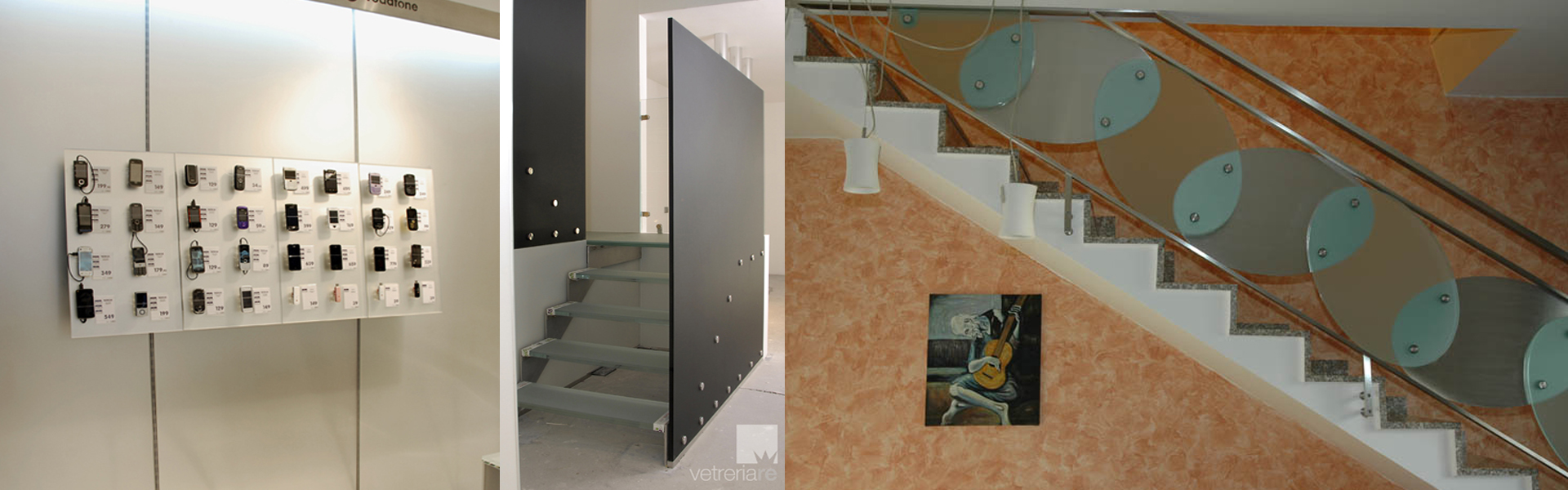
Safety accident-prevention crystals must necessarily be installed in every situation where there is a risk that they could cause injury to people in the event of accidental breakage of the glass surface itself.
Why It Is Necessary to Use Accident-Prevention Crystals
The need to use accident-prevention safety glass is mandated by law, according to national regulations governing its use. However, it is advisable to consider the installation of accident-prevention safety crystals even beyond legal requirements and in private settings, to protect loved ones and property not only from unwanted intrusion attempts but also from the potential dangers inherent in choosing a type of glass that does not comply with the most basic safety prescriptions.
The need to protect people and property in the event of a window breaking represents the primary raison d’être of laminated safety glass, which does not threaten the safety of those nearby. In fact, in the event of accidental breakage, the glass fragments remain firmly adhered to the plastic material (PVB) inserted between the two panes to keep them joined, preventing accidents or injuries. This characteristic, which corresponds to high levels of passive safety, allows laminated glass to be considered an excellent accident-prevention safety element, as it effectively prevents damage to property and people.
The breakthrough resistance characteristics of accident-prevention laminated glass vary depending on the number and thickness of the glass panes and the PVB bonding sheets: by increasing the number of panes and thicknesses, the resistance to breakthrough and intrusion attempts or glass breakage naturally increases as well. The classification of accident-prevention safety glass is carried out according to the UNI9186 standard, which divides safety crystals into three resistance classes.
Characteristics of Accident-Prevention Glass
Laminated safety glasses are also called coupled glasses and constitute an excellent accident-prevention device, which can also be used as fall-protection glass. As seen, laminated glasses consist of two glass panes kept joined together by a tear-resistant film that, in the event of a fracture, keeps all glass fragments fixed and bonded together, preventing possible injuries. However, tempered safety glasses are also considered accident-prevention materials; they are distinguished by high mechanical resistance, bending strength, and thermal shock resistance, and in the event of breakage, they crumble into tiny blunt fragments that significantly reduce the risk of glass-related injuries.
Accident-prevention safety glasses are used in residential or working environments for the creation of full-height glazing, railings, emergency exits, museum display cases, internal glazing for banks and offices, security walls, shop windows, verandas, glazing for stairwells, glass stairs, shower enclosures, fixed or sliding transparent walls, curtain walls, flooring, windows with sliding sashes, and automatic doors. Furthermore, it is necessary to use accident-prevention safety glass in all workplaces or public buildings and in the creation of urban furniture, inside commercial activities or sports halls, in banks or shops, at the entrance of public buildings—both for sliding and revolving doors—and for the creation of all glass elements in contact with the public and characterized by a high frequency of passage.
Vetreria Re, active since 1989 in the design and creation of accident-prevention safety crystals, is able to provide each client with the most suitable type of glass to maximize building protection against unwanted intrusion attempts and the safety of people in case of accidental breakage. The passive safety offered by this type of crystal makes accident-prevention glass suitable for installation in any kind of public or private environment, representing the ideal material for creating safe architectural elements with a high-impact design. This focus on safety ensures maximum comfort and a high-quality finish, while the density of the coupled layers also aids in maintaining acoustic silence.