

In the language of contemporary design, glass takes on an increasingly central role, evolving from a functional element into a true expressive medium. Its nature—simultaneously solid and immaterial, technical and poetic—makes it one of the most fascinating components in interior design. Today, discussing glass and design means entering a dimension where light, matter, and vision intertwine, giving shape to objects and surfaces that define the identity of a space.
In this context, the value of glass lies in its ability to become “living matter”: a surface that does not merely exist but reacts, reflects, filters, and dialogues with its surroundings. It is precisely this dynamic quality that makes it a protagonist in signature design, where every element is intended to be unique, unrepeatable, and deeply connected to the project.
Glass as a Noble Material in Contemporary Design
In the landscape of high-end interior design, glass establishes itself as the noble material par excellence. Its transparency is never neutral: it is a design choice, a gesture that opens up space, lightens it, and amplifies it. At the same time, its processing allows for the introduction of depth and character.
Glass tables, for example, are no longer simple support surfaces but architectural elements that dialogue with the room, reflecting light and multiplying perspectives. Similarly, glass furniture reinterprets the concept of storage, playing with overlaps, transparencies, and suspended volumes. Finally, a glass lamp represents a perfect synthesis of function and poetry: an object that does not just illuminate but constructs an atmosphere.
In all these applications, glass becomes a design language capable of adapting to different contexts while always maintaining a strong aesthetic identity.
Furnishing Glass: Customization as a Form of Luxury
In contemporary design, luxury is increasingly expressed through personalization. Flat crystals for furnishing offer an ideal base for developing tailor-made solutions, adapting to the specific needs of every project.
The precision of the processing ensures perfect surfaces, while the variety of treatments allows for the modulation of the final result based on the context. Glass tables, countertops, coverings, and accessories thus become unique elements, designed to integrate harmoniously into the space.
The applications of glass in contemporary interior design are truly innumerable: chairs and stools, mirrors, shelves, storage units, consoles, lamps, and chandeliers interpret the material in ever-changing ways, transforming it into an element that combines lightness, elegance, and design research.
In this process, detail plays a central role. Edges, thicknesses, transparencies, and joints are not merely technical aspects but design choices that contribute to defining the object’s identity. Glass, once again, proves to be a material capable of translating the complexity of a project into a concrete form.
Dialogue with Designers: The Project as a Shared Process
Signature design is born from the encounter between creative vision and technical expertise. In this sense, collaboration with designers represents one of the most distinctive elements of glasswork. This fosters a continuous dialogue where the production process becomes an integral part of the design.
The collaboration with architects from Studio Urquiola highlights this aspect: attention to detail, experimentation with materials, and the search for innovative solutions transform every process into a shared journey. In this context, glass is not a limit but a possibility to be explored.
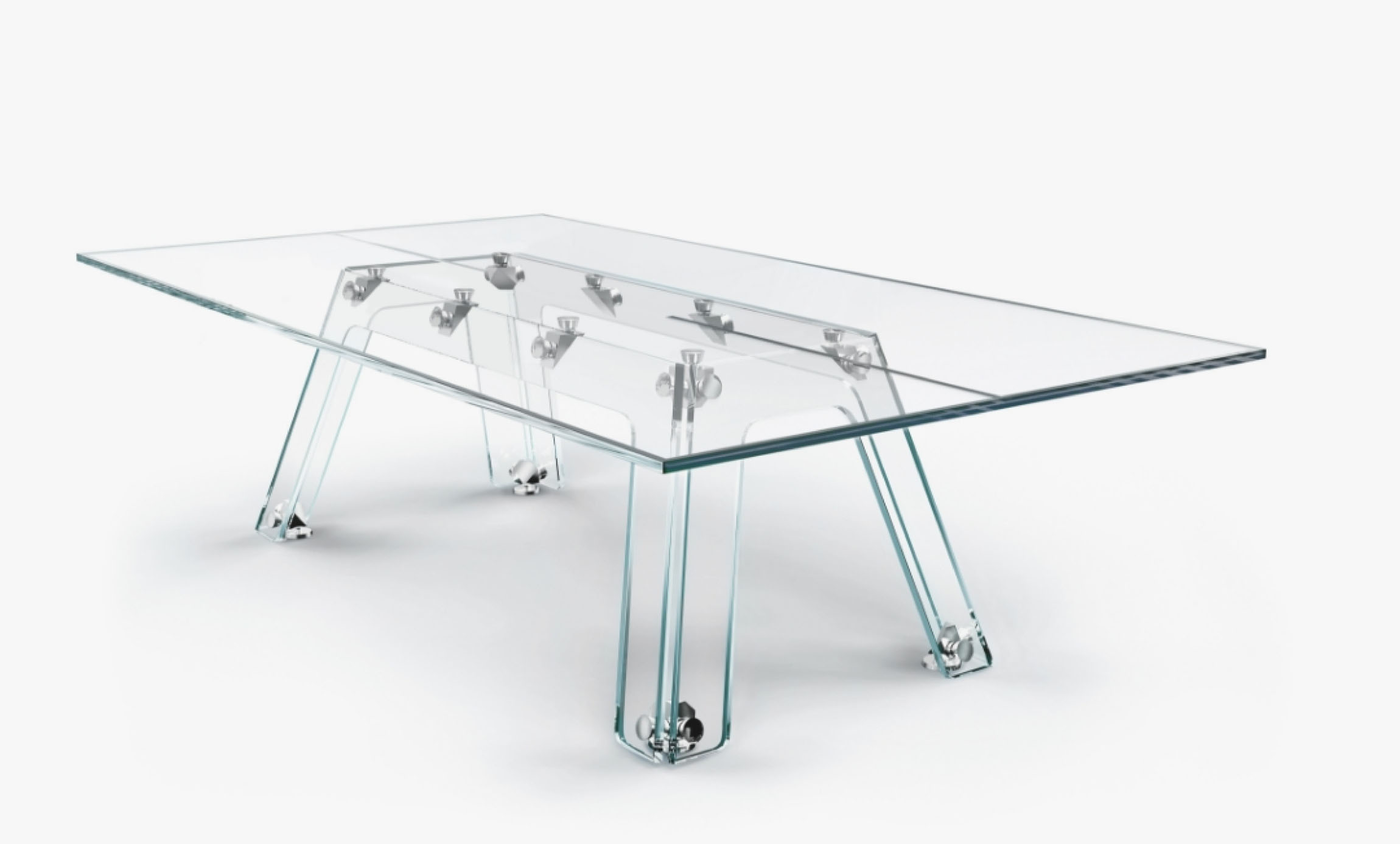
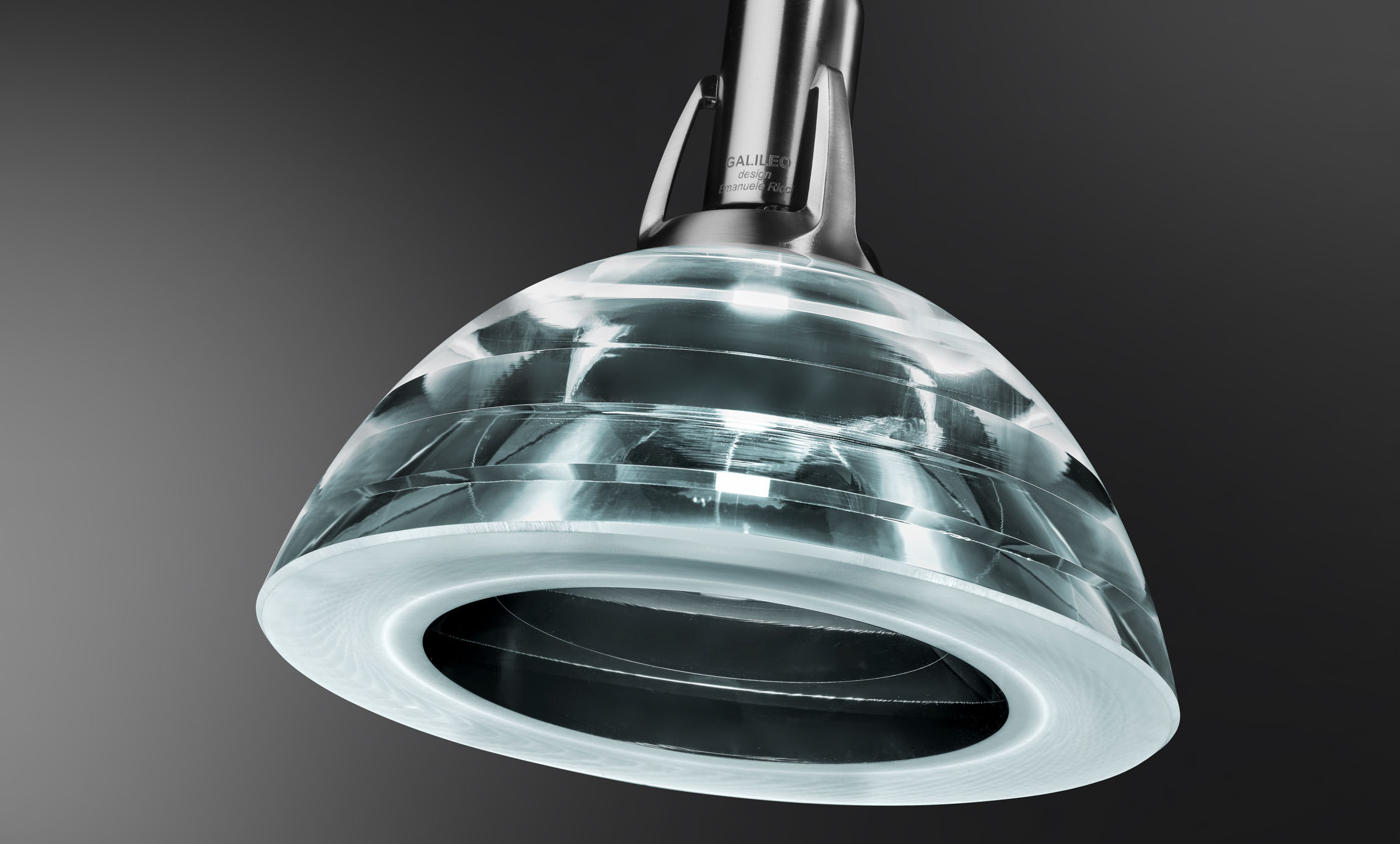
Other examples include projects like Lungolinea, which testify to this synergy between idea and realization. The purity of the lines of this glass ping-pong table adheres masterfully to the solidity of the material, delineating an extremely unconventional and entirely unexpected piece of furniture. Similarly, Galileo is a lamp that decomposes and recomposes light through the generous forms of a single block of artfully worked glass. Combined with the elegance of steel, it delivers a unique result that pushes beyond the limits of mere furnishing function.
This ability to blend materials, techniques, and languages finds further expression in the Reale Collection. In this project, glass relates to leather in a sophisticated balance between rigidity and softness, transparency and texture. Again, the matter is interpreted not only on a level of utility but also aesthetically and sensorially: surfaces, reflections, and details contribute to creating pieces with a strong contemporary character, where luxury emerges through the quality of the finish and the harmony between different elements.
Advanced Techniques: The Transforming Matter
It is through advanced glass processing techniques that the material transforms, assuming new identities and opening up unprecedented design scenarios.
- Fabric Lamination: One of the most innovative solutions; inserting textile materials between glass sheets creates hybrid surfaces where transparency and texture coexist.
- Colored Glass: Introduces a chromatic dimension that enriches the project. Color is not a simple coating but a living component that interacts with light.
- Lead Cames Decoration: Recalls the tradition of historic stained glass, reinterpreting it in a contemporary key.
- Artistic Stained Glass: The most direct meeting point between art and craftsmanship, where manual skill transforms glass into a narrative surface.
Light and Design: Glass as a Sensory Experience
The relationship between glass and light is one of the most fascinating aspects of design. Through glass, light does not just illuminate; it transforms, diffuses, and creates effects.
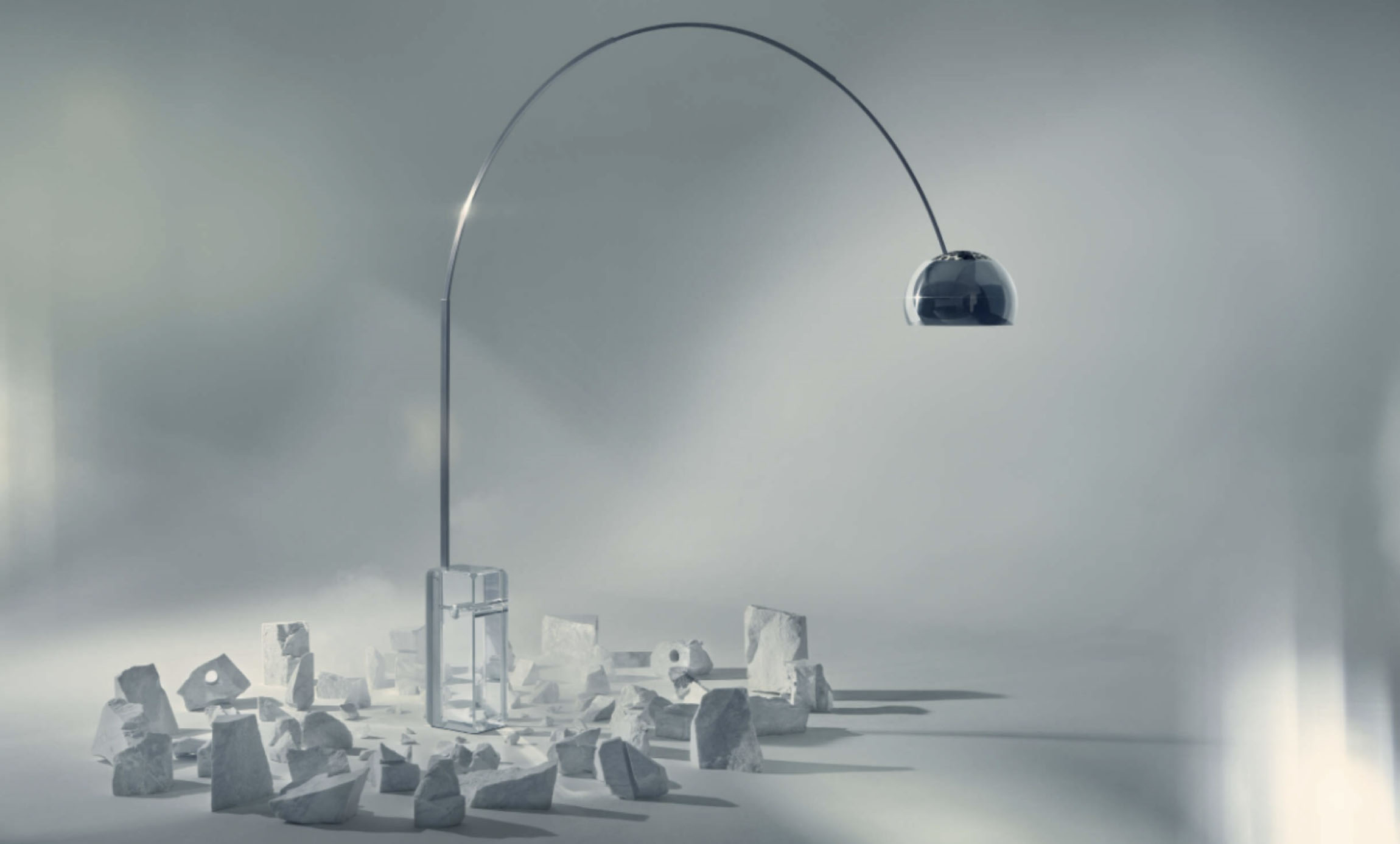
The Flos Arco K 2022 Limited Edition project disrupts the hierarchy between glass and light. In this reinterpretation of a design icon, glass is not used to wrap the light source but—in an oxymoron with its fragile nature—as the supporting base for the entire structure. A single block worked with soft lines provides surprising solidity to the elegant stainless steel curve, ensuring a premium finish and total stability.
Uniqueness, Detail, Vision: The Value of Glass in Signature Design
In signature design, every project is the result of a balance between vision, technique, and sensitivity. Glass, with its versatile and dynamic nature, lends itself perfectly to this approach, becoming a tool to express identity and value.
The possibility of creating custom-made furniture, collaborating with designers, and experimenting with advanced techniques makes glass one of the most interesting materials in the contemporary landscape. Glass tables, furniture, lamps, and decorative surfaces are not simple objects but expressions of a design thought that centers on uniqueness, comfort, and acoustic silence.
In an era where luxury is increasingly linked to personalization and quality, glass confirms itself as a choice capable of combining aesthetics, innovation, and tradition. It is a material that, thanks to artisanal mastery and continuous research, continues to reinvent itself.